



Picture this. A customer has just had a home insurance claim denied. They have spent three weeks chasing the insurer for updates. They have uploaded documents twice. They have been passed between departments. And now, a letter has arrived explaining that their claim does not meet the policy criteria.
They are upset. Possibly very upset. And their next move is to call your contact centre, sit in a queue, and vent to whoever picks up.
That person on the phone cannot see the customer’s face. They cannot read how distressed they are. They cannot use body language to calm the situation down. They are working from a script and hoping for the best.
This is one of the most common service failures in UK insurance right now. Not the denial itself. The way it is communicated.
And it is costing insurers customers, complaints, and FCA scrutiny.
The Complaint Problem Is Real and It Is Growing
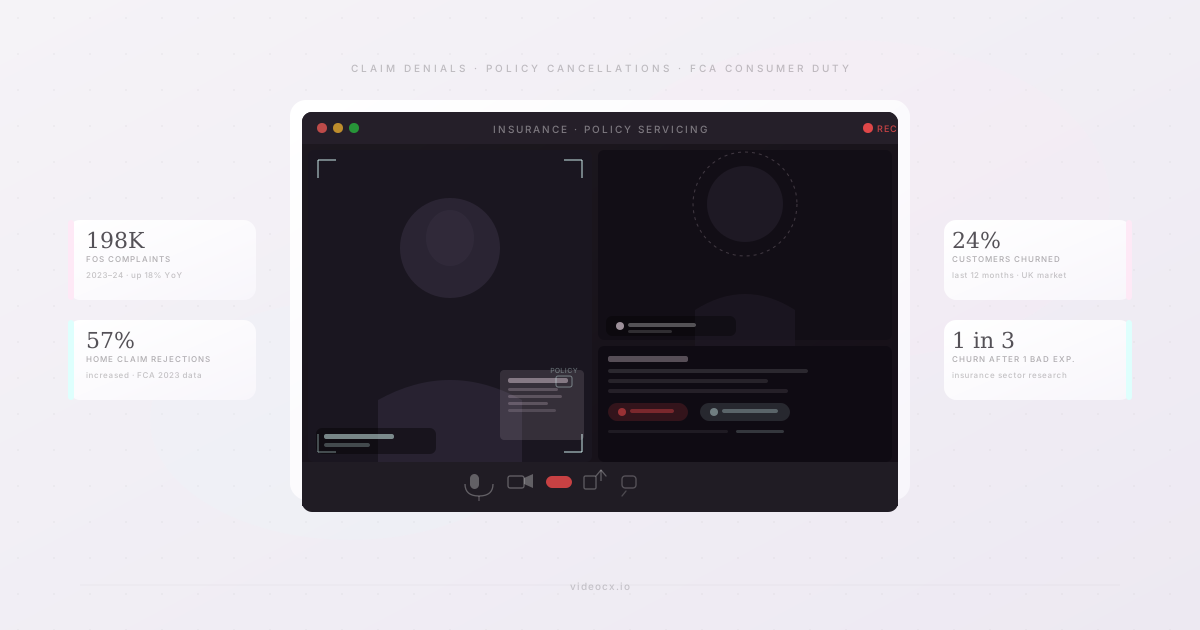
UK insurers are not operating in a gentle regulatory environment right now. The Financial Ombudsman Service received 198,798 new complaints in 2023 to 2024, up from 165,149 the previous year, with complaints about insurance rising 18% overall compared to the year before.
The Ombudsman noted a rise in insurance complaints specifically about claim delays and declined claims, with customers contacting them because they were unhappy with how rejections were handled, the speed of resolution, and the value of payouts received.
According to FCA data, almost three in ten claims on combined buildings and contents home insurance policies were rejected in 2023. For context, the FCA has already stated that service levels are substandard across insurance sectors.
The FCA found that rejected claims increased by 57% for home insurance and 24% for motor insurance, with insurers citing customers claiming for events not covered by their policies as a significant contributing factor.
So here is the reality. A very large number of UK policyholders are receiving claim denials. A meaningful percentage of them are escalating. And the FCA is watching.
The question is not whether these conversations are happening. They are. The question is: what channel are you using to have them, and is it making things better or worse?
Why Some Conversations Need More Than a Letter or a Phone Call
Before we talk about video specifically, it is worth being honest about why claim denials and policy cancellations are so much harder to handle than standard service interactions.
When a customer contacts you about a balance enquiry, the stakes are low. They want information. You give it. Done.
When a customer contacts you about a denied claim, the stakes are completely different. They made a financial decision based on a promise. They paid premiums, possibly for years, expecting protection. And now they are being told that protection is not available. That feels like a betrayal, even when the insurer is technically in the right.
The same logic applies to policy cancellations. A customer who is considering cancelling is often frustrated, financially pressured, or both. They feel like the relationship is not working. If the insurer’s response to that is an automated letter or a rushed phone call, it confirms exactly what they suspected: that nobody actually cares.
Research consistently shows that almost a third of insurance customers will churn after just one negative experience. Customer loyalty to insurance providers has fallen significantly, and customers have more options than ever before.
The channel you choose for these moments is not a small operational decision. It is a retention decision.
The Case for Video: It Is About What Humans Can See
The reason video is the right channel for difficult conversations comes down to something very simple: human beings are wired to read each other.
When we have a hard conversation in person or over video, we use far more than words. We use tone of voice. We use facial expressions. We use the pace at which someone speaks, the pause before an answer, the way someone’s expression softens when they understand that you are genuinely trying to help them.
Research has consistently found that communication with fewer social cues leads people to experience their conversation partner as less empathic or friendly. Social presence, the sense that a real person is there and paying attention, is vital for building interpersonal relationships and for defusing emotionally charged situations.
A letter has none of these cues. A phone call has some of them: tone and voice. But a video call has the closest thing to a face-to-face conversation that remote interaction can offer.
This matters enormously when the conversation involves bad news. When a customer sees that the advisor delivering difficult information looks genuinely sorry, is not rushing, and is paying attention to how the customer is responding, the emotional dynamic of that conversation changes. It does not make the denial easier to accept. But it makes the insurer feel human. And that is what keeps people from escalating to the Ombudsman or leaving for a competitor.
What Happens When You Get the Channel Wrong
Let us think about the different ways a claim denial can be communicated and what each one does to the customer relationship.
A letter. Formal, cold, and one-directional. The customer reads the denial, has no immediate way to ask questions, and is left alone with their frustration. By the time they call in, they have had time to get angrier. The complaint rate for customers who receive denial letters without any follow-up contact is substantially higher than for those who receive proactive outreach.
An automated email with a PDF. Same problem, wrapped in slightly more modern packaging. The customer still feels processed, not helped.
A phone call. Better. The customer can ask questions and the advisor can respond to tone. But without visual cues, the advisor cannot see that the customer is upset before they say so. They cannot adjust their body language to signal empathy. They cannot share a screen to walk through the policy terms that explain the denial. And the customer cannot see that the advisor is a real person who is genuinely engaged with their situation.
A video call. The advisor can see the customer before they say a word. They can read the room. They can adjust their approach based on how the customer looks, not just what they say. They can share their screen to walk through the specific clause that applies. They can take their time. And the customer, who was ready to be angry, finds themselves in a real conversation with a real person who is clearly paying attention.
The FCA’s own Consumer Support Outcome review noted that one insurer introduced structured digital and telephone journeys specifically for customers looking to cancel or downgrade their policy, undertaking risk assessments to consider where a live conversation would be more appropriate to help customers make genuinely informed decisions. This was flagged as a positive example of a firm carefully considering how its support channels affect customer outcomes.
The FCA is not just suggesting that insurers think about channel choice. It is explicitly observing and noting when they get it right or wrong.
The FCA Consumer Duty: Channel Choice Is Now a Compliance Issue
It is worth spending a moment on the regulatory context here because it has shifted significantly.
The FCA’s Consumer Duty, which came into full force for ongoing products in July 2023, requires insurers to deliver good outcomes for customers. Not just good processes. Not just technically accurate communications. Genuinely good outcomes.
The FCA’s Financial Lives survey found that in one in five recent contacts or attempted contacts with a financial services provider, consumers found it very or fairly difficult to find the right contact information. In 13% of contacts where it was possible to get through to someone, what the provider said in response to the query was very or fairly difficult to understand.
Think about that in the context of a claim denial. If a customer cannot easily reach someone to understand why their claim was rejected, or if the explanation they receive is difficult to understand, the insurer is potentially not meeting Consumer Duty obligations. Not because they denied the claim, but because of how they communicated it.
Video helps here in two ways. First, it makes the conversation easier to understand. An advisor can explain a policy clause by sharing their screen, pointing to specific wording, and asking the customer whether they have questions before moving on. Second, it creates a record. Every video conversation on a properly built platform is recorded, stored, and auditable. If a customer later disputes what was said during a denial conversation, the insurer has a complete account.
Video for Policy Cancellation Conversations: The Retention Opportunity Nobody Talks About
Claim denials are one type of difficult conversation. Policy cancellations are another, and they are handled even worse by most insurers.
When a customer contacts an insurer to cancel their policy, most organisations follow one of two paths. They either make it very easy to cancel, which is legally required but commercially damaging. Or they make it slightly difficult, which risks CMA scrutiny and annoys the customer further.
Neither of these is the right answer.
The right answer is to make it easy to cancel, but to make genuinely trying to understand and address the customer’s concern even easier.
A customer cancelling a policy is almost always telling you something. They might be feeling the pressure of rising premiums. They might feel the policy does not cover what they thought it did. They might have had a service experience that left a bad taste. Or they might simply not see the value any more.
Insurance companies rank second among all UK sectors for the highest churn rates, with a recent report showing 24% of consumers switched providers in the last 12 months alone. Customers are increasingly motivated not just by price but by the overall quality of their experience.
A video call at the cancellation stage gives the insurer one chance to change that outcome. Not by pressuring the customer or using hard-sell tactics, which Consumer Duty explicitly prohibits, but by actually listening.
When an advisor can see a customer’s face during a cancellation conversation, they can tell the difference between someone who is determined to leave and someone who is frustrated but open to being helped. They can tailor their response accordingly. They can explain policy benefits the customer may have forgotten. They can offer solutions that are actually relevant to what the customer is feeling, rather than a scripted retention offer that gets read whether or not it fits the situation.
Research consistently shows that customer churn is highest in the first year of purchasing an insurance policy and significantly decreases after four years. And the top reason customers report switching products and services is feeling unappreciated.
A video conversation that makes a customer feel genuinely heard and valued at the point they were about to leave is one of the most powerful retention tools an insurer has. It costs very little extra on a per-call basis. And it works.
What a Purpose-Built Platform Does That a Generic Video Tool Cannot
There is an important distinction to draw here between using a video platform and using the right video platform.
Telling an advisor to jump on a Zoom call with an upset customer is not a solution. It is a liability.
Regulated financial conversations need to be recorded. They need to be stored in a way that is auditable. The advisor needs to have customer data visible before the call starts. They need on-screen guidance for navigating sensitive conversations like denials and cancellations. The call needs to be routable, so the right specialist is available for the right type of conversation. And if the connection drops mid-conversation, which can happen at the worst possible moment, the session needs to be recoverable without starting over.
This is exactly what VideoCX.io’s insurance policy servicing platform is designed to handle. It is not a repurposed conferencing tool. It is purpose-built for financial services, with compliance recording, smart routing, advisor guidance on every screen, and the ability to handle the full breadth of sensitive insurance journeys, from claim discussions and cancellation conversations to policy amendments and regulatory disclosures.
The advisor on a claim denial call should not be reading from a generic script. They should have the customer’s claim history, policy details, and relevant information visible before the call starts. They should have prompts that help them navigate the conversation with empathy and accuracy. And the whole session should be captured in a format that protects both the customer and the insurer.
Identity, Verification, and Documentation: All Handled in the Same Session
One thing that comes up regularly in difficult insurance conversations is the need to verify who you are talking to. A claim denial that involves sensitive personal data, or a cancellation conversation that requires confirmation of customer identity, needs to happen in a compliant environment.
Video KYC allows identity verification to take place entirely within the video session. The customer presents their documents on camera. The advisor confirms their identity live. The session is recorded and time-stamped. Everything that happens in that conversation is documented.
For claims conversations where supporting documents need to be reviewed, the customer can share or upload relevant items during the call itself. The advisor can confirm receipt and walk through how each document relates to the claim assessment in real time. This level of transparency, showing the customer exactly what is being considered and why, does more to defuse a difficult conversation than almost any other tactic.
The FCA’s own research found that many claim rejections occur because customers genuinely did not understand what their policy covered. Industry experts have noted that a significant number of customers think they are getting adequate cover when they are not, because the exclusions are not obvious at the point of purchase.
A video conversation during a claim denial is the first real opportunity to close that understanding gap. An advisor who can walk through the policy terms on screen, explain clearly which clause applies and why, and invite questions, is performing a genuine service. The customer may still be disappointed with the outcome. But they are far less likely to feel deceived. And they are far less likely to reach out to the Financial Ombudsman.
The Advisor Experience Matters Too
Most blogs about difficult customer conversations focus entirely on the customer. But the advisor experience in these moments is equally important and almost never discussed.
Handling a distressed or angry customer over the phone, without being able to see them, is genuinely hard. Advisors have to work harder to pick up on emotional cues. They have no visual feedback to tell them whether the customer is calming down or escalating. They have no body language to deploy. They are working almost blind.
Video changes this. Advisors who can see the customer they are talking to report feeling more in control of the conversation. They can read the room. They can adjust. And with on-screen advisor guidance, they have support at every stage, whether they are explaining a specific policy clause, navigating a regulatory disclosure, or steering a cancellation conversation toward a retention outcome.
Better advisor experience means lower burnout. Lower burnout means better conversations. Better conversations mean fewer escalations. The relationship between advisor wellbeing and complaint volumes is direct, and it starts with giving advisors the right environment to do difficult work well.
From Difficult Conversation to Trusted Relationship
Here is the counter-intuitive truth about claim denials and policy cancellations: handled well, they can actually strengthen the customer relationship.
A customer who contacts their insurer in a state of frustration or upset and comes away from a video conversation feeling genuinely heard, clearly informed, and respectfully treated has had an experience that most insurers never deliver. That experience is memorable. It builds trust in a way that a smooth, frictionless transaction never quite achieves.
VideoCX.io’s video banking and servicing platform supports more than 400 insurance and financial services interactions, from routine policy queries to the most sensitive conversations an insurer can have with a customer. The platform’s smart routing, compliance recording, parallel chat resilience, and advisor guidance tools are specifically designed for the moments when getting the channel right is not just good service. It is the difference between a loyal customer and a complaint to the Ombudsman.
The insurers who get the next five years right in UK customer experience will not be the ones who sent the best-designed letters. They will be the ones who showed up, on screen, with genuine attention and the right tools, at the moments when their customers needed them most.
What Good Looks Like: A Claim Denial Conversation on Video
To make this concrete, here is what a well-designed claim denial conversation looks like on a purpose-built video platform.
The customer receives a proactive outreach message from their insurer before the denial letter even arrives, letting them know an advisor would like to talk through the outcome of their claim review. They click a single link. Pre-call instructions let them know the call will be recorded for compliance and that they may want to have their policy details nearby.
The advisor already has the customer’s claim history, the specific clauses in question, and any uploaded documents visible before the call starts. When the customer joins, the advisor greets them by name, acknowledges that the outcome was not what they were hoping for, and takes time to walk through the reasons clearly, sharing their screen to reference the exact policy wording.
The customer asks questions. The advisor answers them directly, without deflecting. If the customer wants to make a formal complaint, the advisor explains the process clearly and initiates it during the same session. If the customer has additional evidence to submit, they can upload it during the call.
The session ends with the customer knowing exactly where things stand and what happens next. Whether they are satisfied with the outcome or not, they feel like they were dealt with fairly. That is the standard the FCA expects. And it is the standard that keeps customers.
Want to see how VideoCX.io handles sensitive insurance conversations from claim denials to policy cancellations and everything in between?
Book a demo with VideoCX.io and we will walk you through the exact platform features designed for difficult customer moments, including compliance recording, smart routing, advisor guidance tools, and full audit trail capability.