


Think about the last time a life insurance company reached out to you just to check in. Not to sell something. Not to process a claim. Just to ask: does your policy still make sense for your life right now?
For most UK policyholders, that call never comes.
And that silence is expensive. Life insurance has one of the lowest natural touchpoint frequencies of any financial product. A customer might buy a policy in their thirties and barely speak to their insurer again for a decade. No news is not good news in this industry. No news is a slow drift toward cancellation.
The annual policy review is the one moment where insurers get to change that. But here is the thing: most annual reviews are still done over the phone, through generic letters, or a clunky online portal that nobody enjoys using. They feel like admin, not advice. Customers do not feel seen. They feel processed.
Video changes that completely. And in 2026, life insurers in the UK who have not figured out how to use video for annual reviews are quietly handing retention to the competition.
Why Annual Reviews Matter More Than Most Insurers Realise
Life insurance has a quiet churn problem. The UK protection market saw annual term insurance sales peak at 1.71 million in 2021 and has been unable to build on that growth, with sales falling in each of the past three years. Meanwhile, cost of living pressures are making customers question every direct debit leaving their account, including their insurance premiums.
Life insurers face the challenge of maintaining long-term relationships with fewer touchpoints. Policies often span decades, and customers may interact with their insurer only a handful of times after the initial purchase. The result is a situation where the insurer knows very little about the customer’s current circumstances, and the customer has forgotten why they bought the policy in the first place.
Here is where the annual policy review becomes your retention superpower. Scheduling an annual check-in call, even when everything is running smoothly, and being proactive about customer needs when life changes such as marriage, new children, or retirement occur, are among the most reliable ways to build lasting client relationships in life insurance.
The problem is not whether to do reviews. The problem is how. And right now, most insurers are doing them in the least engaging way possible.
What a Bad Annual Review Looks Like (And Why It Fails)
A letter arrives. It says something like: “Your annual review is due. Please call us.” The customer puts it in the “deal with later” pile. Later never comes. The policy quietly remains on a direct debit the customer has stopped thinking about. Until one day they cancel it, or simply stop paying.
Or worse, an agent calls at the wrong time, reads from a script, offers no personalised insight, and leaves the customer feeling like they just wasted twenty minutes.
Having a face-to-face interaction during a policy review boosts trust, clears confusion, and helps clients see that the mission is to help them. Non-verbal cues are integral to effective communication, and for important conversations, having tone and body language for context makes a real difference.
You cannot get tone and body language from a letter. You barely get it from a phone call. But you absolutely get it from a video conversation.
What Video-Based Annual Reviews Actually Do
When a life insurer moves their annual review process to video, several things happen at once.
The advisor becomes a real person. This sounds obvious but it is genuinely powerful. Customers who can see who they are talking to, who can read facial expressions and sense warmth, form stronger emotional connections to that brand. Trust is built visually in ways that voice alone cannot replicate.
The conversation becomes two-way. On a video call, it is much easier for a customer to ask questions, point to documents on their screen, show their advisor something that has changed in their life, and feel like they are in a real conversation rather than being talked at.
The review feels like a service, not a tick-box. When a customer finishes a video-based review and feels genuinely heard, they are far less likely to cancel. Customers who feel appreciated and heard are significantly more likely to remain loyal, and face-to-face interactions including video chats are among the most effective tools for achieving this.
Upselling happens naturally. When a customer mentions their new baby or a house they just bought, and the advisor can see their expression, the conversation about increased cover or a new rider happens organically. It does not feel like a sales pitch. It feels like helpful advice.
The Technology Gap That Is Holding Insurers Back
Here is where a lot of life insurers get stuck. They know video is the right move. But their current setup is not built for it.
Some are using off-the-shelf video tools like Zoom or Microsoft Teams. These work fine for internal meetings but they are not built for regulated financial conversations. There is no audit trail, no compliance recording that integrates with your core systems, no built-in KYC layer, no workflow guidance for advisors during the call, and no smart routing to make sure the right specialist picks up the right call.
Others have tried to build something in-house, which means expensive development cycles, ongoing maintenance costs, and a product that is always a few features behind what customers actually need.
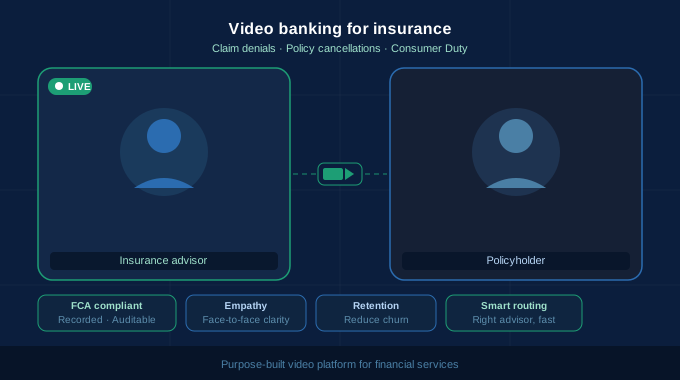
The smarter path is a purpose-built platform that was designed specifically for financial services video interactions from day one. This is exactly what VideoCX.io’s video banking and video branch platform was built for. It is not a generic video tool that has been adapted. It is an enterprise-grade video engagement platform built around the specific workflows, compliance needs, and customer journeys of financial services organisations, including life insurers.
What a Purpose-Built Video Platform Enables for Annual Reviews
Let us get specific about what changes when you use a platform built for this purpose rather than a repurposed video conferencing tool.
Smart Routing to the Right Advisor
When a customer initiates a review call, they should not be waiting in a queue, listening to hold music, wondering if they are going to get someone who knows their policy. Smart routing logic matches the customer to the right advisor in seconds, not minutes. The call begins with context, not confusion.
Pre-Call Instructions That Reduce Drop-offs
Before the video call connects, the platform can send the customer dynamic instructions relevant to their specific review: which documents to have ready, what to expect during the call, why the call is recorded for compliance. Targeted outreach that is well-prepared and value-driven increases retention by meaningful margins. Pre-call preparation works the same way. It sets expectations, reduces anxiety, and means the advisor spends the call giving advice, not asking the customer to find their policy number.
Compliance Built Into the Journey
Life insurance is regulated. Every annual review conversation needs to be recorded, stored, and accessible for audit purposes. A purpose-built platform handles this automatically. Recordings, transcripts, documents shared during the call, and advisor dispositions all sync back to your core systems without manual effort. This is not a nice-to-have. It is what keeps your compliance team happy and your FCA obligations met.
This is also where video KYC becomes relevant. If a customer’s circumstances have changed significantly, whether they have a new address, a change in financial situation, or updated beneficiary information, identity and compliance checks can be completed during the same video session. No separate journey, no follow-up letter, no friction.
Parallel Chat as a Safety Net
What happens when a video call drops halfway through a review? On a standard video tool, the call is gone. The customer has to call back, explain everything again, and the trust built in the first ten minutes evaporates. A platform with parallel chat keeps the session alive even when the video drops. The advisor and customer can continue via chat and reconnect on video in the same session. This one feature alone reduces session drop-offs significantly.
Real-Time Advisor Support
During the review, advisors need to know what to cover, what products might be relevant, and how to navigate specific customer situations. A built-in advisor guidance layer on each screen means less time fumbling and more time actually helping. Customers notice when an advisor is confident and well-prepared. It builds trust.
The Insurance Policy Servicing Opportunity
Annual reviews are not just about retention. They are the moment where an insurer can genuinely assess whether a customer’s current policy is still the right fit for their life.
A customer who bought a term policy when they were 32 and single, and is now 41 with two children and a mortgage, probably needs a conversation. That conversation could result in additional cover, a new rider, or a completely different product. Done face to face over video, this feels like financial advice from someone who cares. Done through a generic renewal letter, it feels like nothing at all.
This is the core of what insurance policy servicing through video can achieve. It transforms a transactional touchpoint into a genuine relationship moment, and relationship moments are what keep customers for life.
Cross-sell conversion rates increased by 65% when an agent was present during a digital journey, moving from just 10% with a fully automated experience to 75% with a human employee involved. Those numbers should make every life insurance retention leader stop and think.
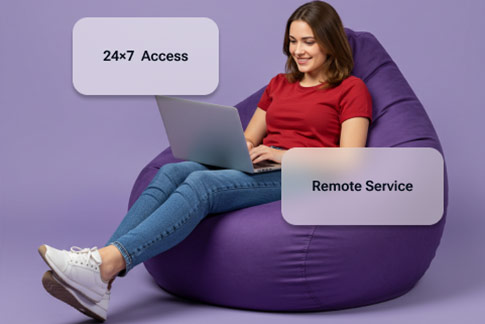
Browser-Based Access: Meeting Customers Where They Are
One reason video adoption in insurance is lower than it should be is the assumption that customers need to be inside a specific app to access video services. This creates friction that kills engagement before it starts.
88% of UK adults use some form of online banking or remote banking, which is around 48 million people, and 75% use mobile banking. But a significant portion of customers are browsing financial services, researching their policies, and asking questions directly from their browser, without ever opening a dedicated app.
A video platform that works from any browser removes a huge barrier to engagement. The customer receives a link, clicks it, and they are in a compliant, secure video session with their advisor. No downloads. No logins. No reason to say “I’ll do it later.”
From Review to Relationship: The Cross-Sell and Upsell Layer
Insurers that do annual reviews well do not just retain customers. They grow them.
Annual reviews give insurers the opportunity to educate customers about new products or services that might better suit their evolving needs as they age or experience life changes. The key word here is educate, not sell. When a customer understands their current coverage and what gaps might exist in their situation right now, recommending an add-on product feels like help, not a pitch.
Video is uniquely suited to this. An advisor can share their screen, walk through a simple comparison, point to specific numbers, and give the customer time to ask questions in real time. The trust created by a good video review makes the customer significantly more open to hearing about products they did not know they needed.
What the Data Is Telling You
More than 70% of digital banking sessions result in no meaningful engagement. Customers are logging in, looking around, and leaving without taking any action. This is the problem with purely digital, asynchronous communication. It gets ignored.
A live video session is the opposite of that. It demands attention from both sides. It creates a moment that feels important. And importantly, it creates a record, both literally in terms of compliance recording, and emotionally in terms of what the customer remembers about their insurer.
Financial services clients who meet with their advisors more than four times a year are twice as likely to feel optimistic about their financial situation. Even one meaningful video review per year shifts that number in the right direction.
Getting Compliance Right from the Start
One concern that comes up whenever insurers explore video for advisory conversations is compliance. How do you verify identity over video? How do you ensure the recording is stored correctly? What happens if a customer disputes advice that was given on a call?
These are legitimate questions, and they are exactly the questions that a purpose-built platform is designed to answer. Video-based credit and advisory verification addresses precisely this challenge: creating a structured, compliant environment for regulated financial conversations, including advisor guidance on screen, automatic documentation, and full audit capability.
When compliance is built into the platform rather than bolted on afterward, it stops being a barrier and starts being a feature.
What Good Looks Like: A Simple Annual Review Flow on Video
Here is what a well-designed video annual review journey looks like from start to finish.
The customer receives a notification, email or in-app, that their annual review is due. They click a single link. Pre-call instructions appear on their screen, telling them what documents to have ready and what will be covered. The platform routes them to the right advisor in under ten seconds. The call begins with the advisor already aware of the customer’s policy details and any life events flagged in their profile.
During the call, the advisor walks through the current policy, asks about any changes in the customer’s life, and explains the current coverage in plain language. If a gap is identified, a relevant product is introduced naturally. All documents shared are logged automatically. The call recording and a summary are synced back to the insurer’s core systems at the end of the session.
The customer hangs up feeling like their insurer actually knows them. That feeling is retention.
The Bottom Line
Annual policy reviews are not a compliance chore. They are the most important retention lever a life insurer has. But they only work when they are done in a way that makes customers feel genuinely valued, heard, and helped.
Video is the format that makes that possible at scale. Not video as a workaround, but video as a properly designed, compliant, workflow-driven experience built specifically for financial services conversations.
The life insurers who figure this out in the next twelve to eighteen months will build retention rates that their competitors cannot explain. The ones who do not will keep wondering why their best policyholders keep leaving.
Ready to see what a purpose-built video review experience looks like for your team?
Book a demo with VideoCX.io and we will show you exactly how it works across your specific policy journeys, from annual reviews to full onboarding, compliance, and beyond.